Wet-Laid Nonwoven
Technology
Wet-laid nonwoven manufacturing is closely related to traditional papermaking. Staple fibers are suspended in water and deposited onto forming wires, producing an exceptionally homogeneous fiber distribution. This process allows us to work with a wide range of high-performance fibers and achieve precise, reproducible material properties at industrial scale.
How are wet-laid nonwovens manufactured?
Wet-laid manufacturing suspends staple fibers in water for uniform dispersion, deposits them onto forming wires, then dries and finishes the sheet. This three-step process — related to papermaking — produces extremely homogeneous, isotropic fiber distribution that dry-laid methods cannot match.
Staple fibers up to 20 mm in length, or flock material, are carefully chosen and pass a preparation treatment. The type of fiber, its length range, and the blend composition are all managed accurately to ensure they meet the required material standards.
Fibers are suspended in water and uniformly distributed within the mixture. The process utilizes a closed water circuit, ensuring effective resource reutilization. Consistent dispersion is essential for attaining the isotropic fiber distribution that distinguishes wet-laid processes from dry-laid methods.
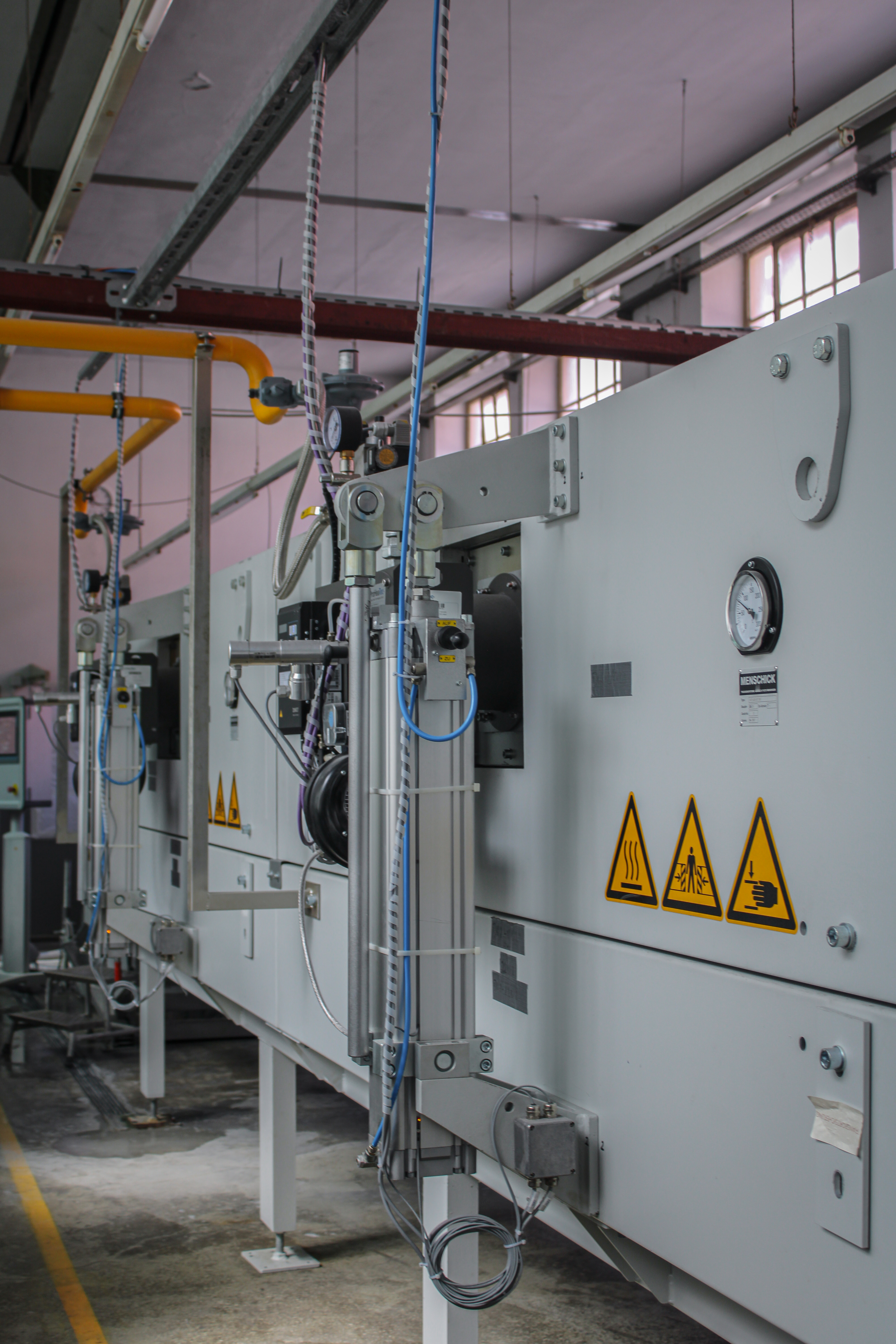
The fiber mixture is distributed onto forming wires, then drained and dried with heat to create a unified sheet or flexible fabric. It is possible to impregnate functional particles for additional functions. Further finishing procedures, including the application of surface coatings via traditional methods or advanced vacuum techniques such as PVD, CVD, or PECVD, can significantly improve the performance and properties of the final material.
Why choose wet-laid over other nonwoven technologies?
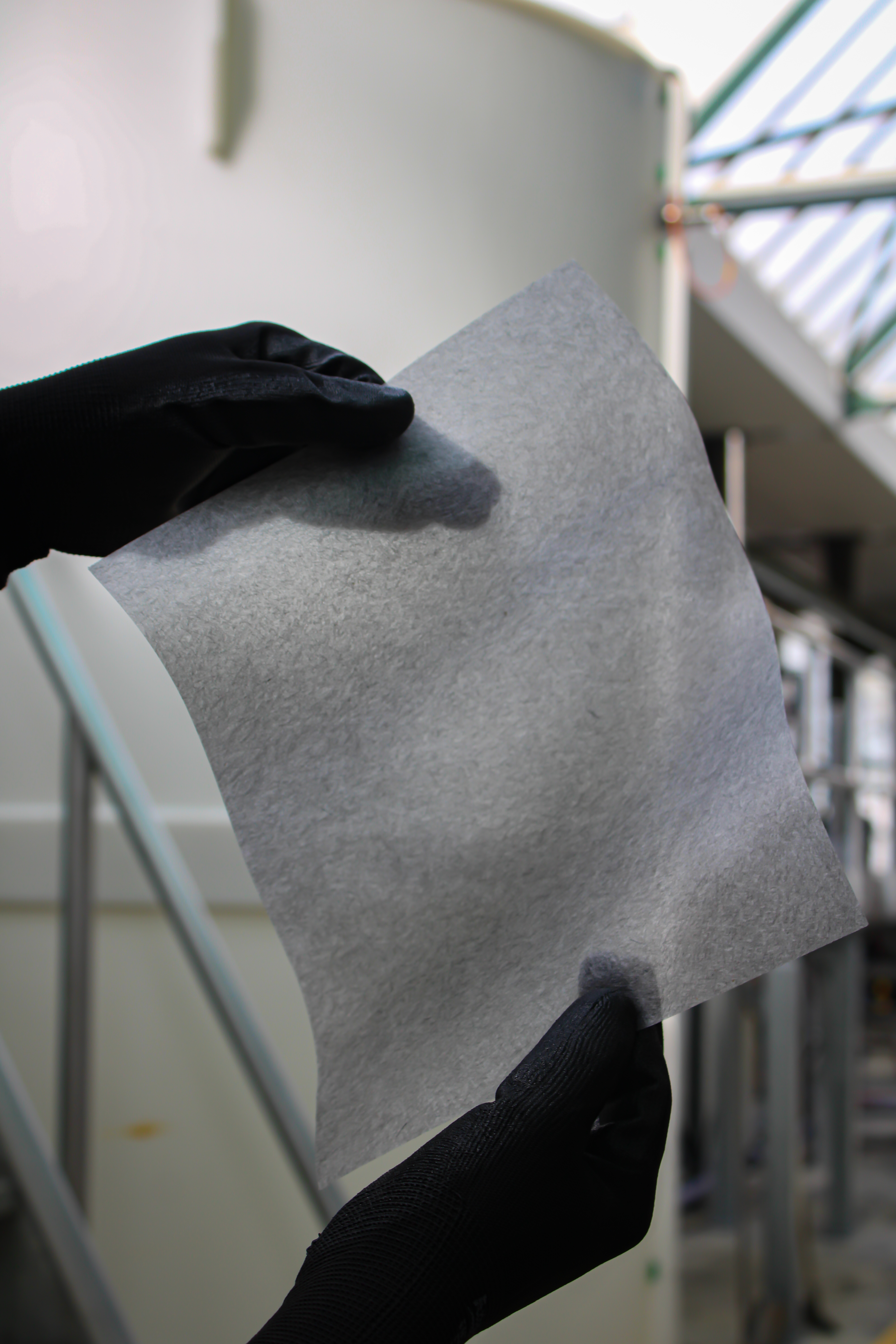
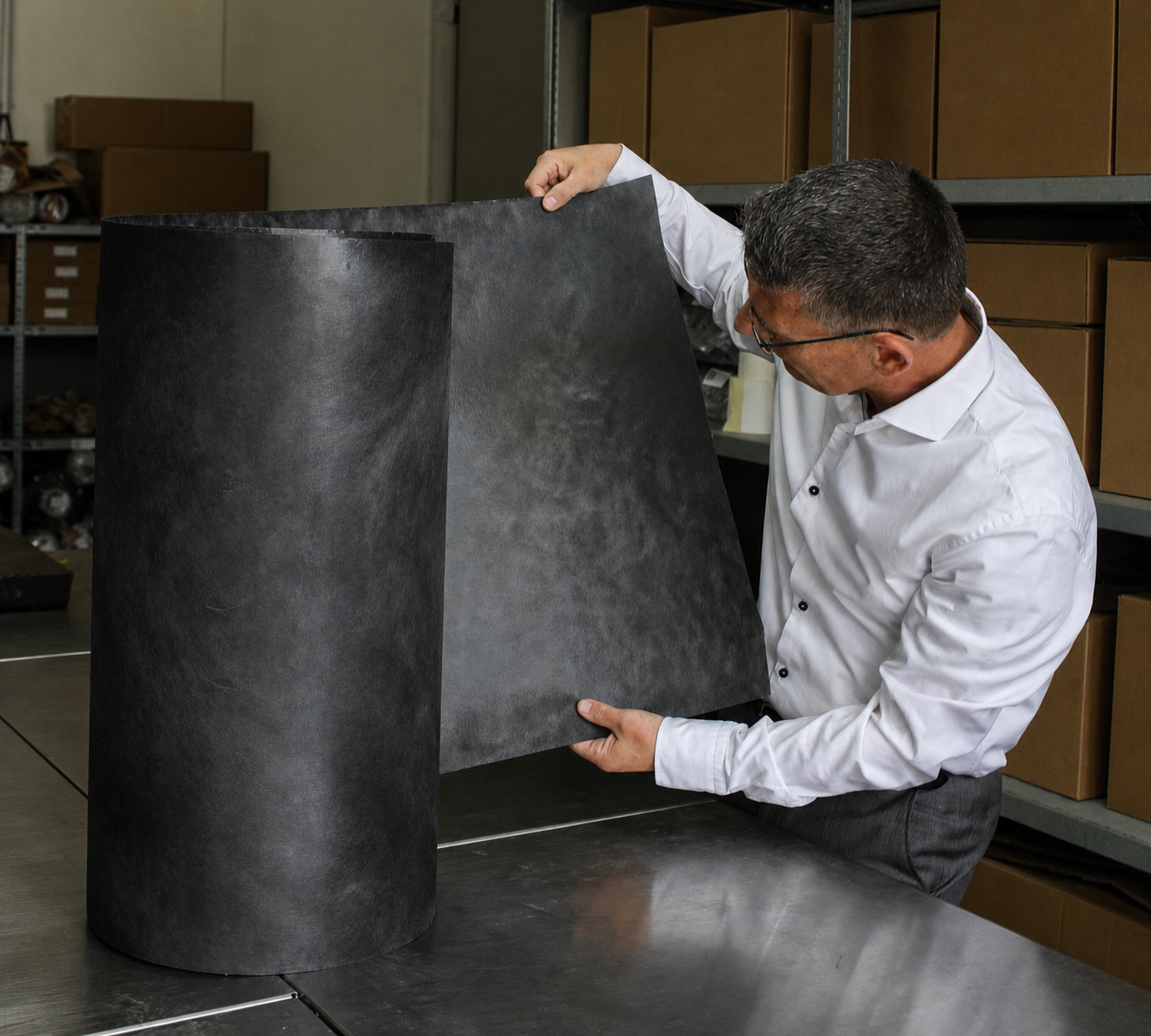
Wet-laid nonwovens achieve significantly more homogeneous fiber distribution than dry-laid, meltblown, or spunbond alternatives. The water-based process handles short staple fibers (up to 20 mm) including carbon, silica, ceramic, and metal — fiber types that are difficult or impossible to process with other nonwoven methods.
- Achieves highly uniform fiber distribution, which is unattainable with dry-laid methods
- Enables production of lower basis weights, allowing for extremely thin structures
- Processes recycled fibers effectively while maintaining overall uniformity
- Minimizes anisotropy, resulting in more consistent in-plane properties
- Isotropic properties across the sheet plane
- Scalable production volume on industrial paper-machine-based equipment
- Thinner cross-sections achievable compared to woven structures
- Multi-material fiber blends processable in a single production step
Which high-performance fibers can the wet-laid process handle?
The wet-laid process handles carbon, glass, quartz, silica, ceramic, metal, polyester, aramid, PI, and PEEK fibers — including recycled fiber streams. Coated and special-shape fibers can also be processed, enabling tailored electrical, thermal, and mechanical properties in the finished nonwoven.
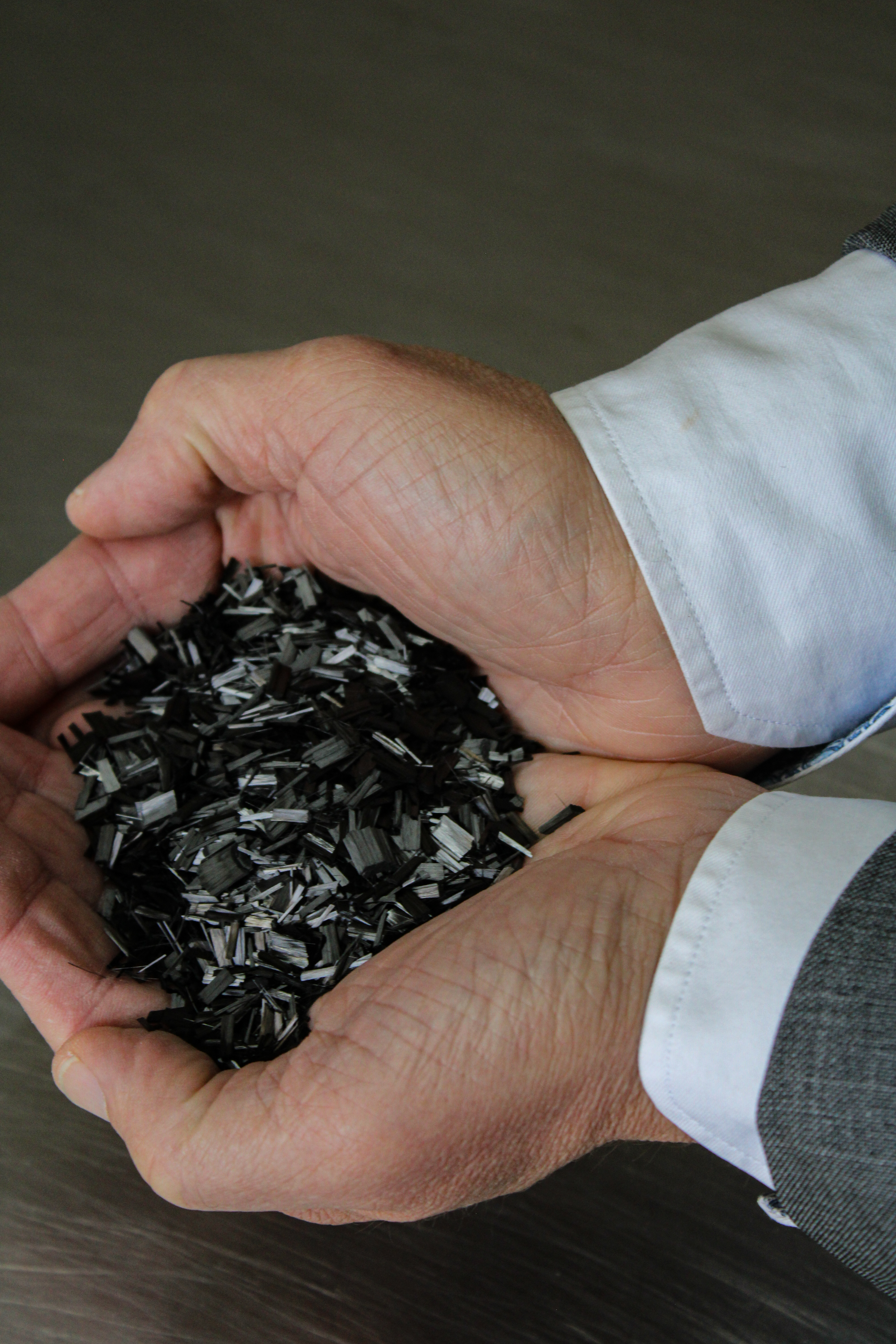
Electrically conductive, chemical resistant, high mechanical strength, low weight
Very low dielectric constant, chemically inert, high-temperature stable up to 1150 °C
Extreme temperature resistance, dimensionally stable, non-combustible
High electrical conductivity, EMI shielding capability
Versatile base fiber, compatible with recycled fiber streams
Thermally stable, high-performance polymer fibers for demanding environments
Enhanced properties via functional layers (metal or polymer coatings) or unique fiber shapes and surfaces
How do PVD, CVD, and PECVD coatings enhance nonwoven performance?
Thin-film deposition technologies add electrical conductivity, optical properties, or barrier functions to the nonwoven substrate. PVD, CVD, and PECVD coatings operate in vacuum at nanometer to micrometer scale, enabling precise property engineering without altering the base material's structure.
Physical Vapour Deposition: An industry proven vacuum process depositing metallic or ceramic thin films in a nanometer scale, enhancing conductivity, reflectivity, or wear resistance.
Chemical Vapour Deposition deposits a uniform coating on fibers via gas-phase reactions, making it ideal for complex shapes and consistent coverage.
Plasma-Enhanced Chemical Vapor Deposition (PECVD) achieves reduced deposition temperatures through plasma activation. This technique facilitates the coating of temperature-sensitive substrates while ensuring high film quality.
Atomic Layer Deposition (ALD) is a vapor-phase process that applies material one atomic layer at a time, achieving uniform coatings even on complex 3D shapes. For thin nonwovens, ALD provides nanometer-thick, pinhole-free coatings with controlled functional properties and minimal pore blockage.
In addition to advanced vacuum coating technologies, our nonwoven materials are compatible with established wet-chemical and mechanical coating methods:
Frequently Asked Questions
In wet-laid manufacturing, staple fibers up to 20 mm are suspended in water and deposited onto forming wires. Water provides superior fiber dispersion compared to air, producing extremely homogeneous, isotropic fiber distribution across the sheet. This uniformity translates into consistent electrical, thermal, and mechanical properties — critical for applications like gas diffusion layers, heating elements, and EMI shielding where local property variations cause performance failures.
Meltblown and spunbond are melt-extrusion processes limited to thermoplastic polymer fibers. Wet-laid technology, by contrast, can process virtually any short staple fiber regardless of its melting behaviour — including carbon, glass, quartz, ceramic, metal, aramid, and recycled fibers. This makes wet-laid the only practical route to high-performance technical nonwovens based on these fiber classes. Wet-laid also achieves significantly better fiber distribution uniformity and lower basis weights than meltblown or spunbond at equivalent fiber types.
The primary advantage of wet-laid processing is extremely homogeneous fiber distribution — far superior to dry-laid (air-laid) alternatives. This translates into more consistent mechanical, electrical, and thermal properties across the sheet, critical in applications such as gas diffusion layers, heating elements, and electromagnetic shielding. Wet-laid also enables lower achievable basis weights, better in-plane isotropy, and full compatibility with recycled fiber fractions without sacrificing material uniformity.
Our wet-laid process handles a broad range of high-performance fibers: carbon (virgin and recycled), glass, quartz and silica, ceramic, metal, polyester, and specialty polymer fibers including aramid, PI, and PEEK. Fiber blends within a single sheet are fully supported. The key requirement is a staple fiber length of up to 20 mm — a constraint that excludes continuous filament processes but covers the vast majority of high-performance technical fiber types.
Wet-laid technology is capable of producing very lightweight sheets starting from around 10 gsm — significantly lower than typical dry-laid processes. Our carbon365 product line covers 10 to 150 gsm. At the upper end, multiple layers can be combined to achieve higher basis weights. Thickness depends on fiber type and consolidation; our aerogel-based aero365 material, for example, achieves effective thermal insulation at just 1–3 mm per layer. Specific areal weight and thickness targets can be addressed in a custom development project.
Yes — and this is one of the key sustainability advantages of wet-laid technology. Recycled carbon fibers, for example, can be processed into high-quality nonwovens with the same homogeneous fiber distribution as virgin fiber materials. Dry-laid processes struggle with recycled short-cut fiber fractions because the air dispersion becomes uneven; wet-laid dispersion is unaffected by fiber origin. We actively incorporate recycled carbon fibers into our carbon365 product line.
Beyond the wet-laid core process, we extend material functionality through thin-film deposition: PVD (Physical Vapour Deposition) deposits metallic or ceramic films under vacuum, adding conductivity, reflectivity, or wear resistance. CVD (Chemical Vapour Deposition) applies conformal coatings via gas-phase reaction, ideal for complex geometries. PECVD (Plasma-Enhanced CVD) enables coating of temperature-sensitive substrates at lower process temperatures while maintaining film quality. These coating routes allow us to engineer properties — electrical, barrier, optical — directly onto the fiber network of the nonwoven substrate.
Ready to Develop Your Material?
Bring us your application challenge. We develop custom nonwoven materials from specification to scalable production.